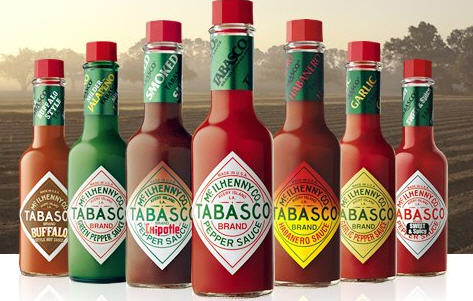
When former Tabasco president Paul McIlhenny is laid to rest this coming Wednesday, a lot of people will remember a lot of things about him - his immense love of food and drink, his support of chefs from anywhere but especially from Louisiana, his concern for his state’s endangered wetlands and, of course, his promotion of that famous pepper sauce until the iconic product was sold in 165 countries.
I’ll mostly remember him for the ties.
Sure, one of the primary “takes” of Louisiana food tourism is a visit to the McIlhnennys’ Avery Island near New Iberia, a peppery pilgrimage I made several times. Like the sweet garlic that rides the air currents when you drive through Gilroy, Calif., or the muscat wine that perfumes your every breath in the French town of Beaumes de Venise, the aroma of peppers, vinegar and salt always made me hungry whenever I visited the place Tabasco was made. But whenever I visited Paul himself, is his office highrise in New Orleans, he always took me to a drawer, pulled it open and said with a wide grin, “Take as many as you like.”
What that drawer contained, in abundance and in variety, was branded Tabasco neckties, some that screamed “walking advertisement” and others that were much more subtle. You have to understand: I did a weekly TV show in New Orleans for many years, talking about food naturally, and it got where the only ties I wore on the air were Tabasco ties. To me, it was a “food statement.” To Paul McIlhenny, it was the sort of thing he’d been doing since his birth (in Houston, no less) in 1944. He and I had a running gag about the Tabasco boxer shorts that filled the drawer next door. “I’d take some, Paul,” I said even after the joke was very old, “except nobody will ever see them on TV.”
Tabasco sauce, however - Paul would tirelessly correct me: it was “Tabasco brand pepper sauce”- and not ties, boxer shorts or aprons, remained the McIlhennys primary product from the day the company was founded on Avery Island in 1868. Edmund McIlhenny deserves the credit for that, though several of his successors deserve kudos for making the stuff a household word. During the world wars that formed the 20th century, and all the way through Korea and Vietnam, Tabasco followed American GIs into battle. It was either a taste of home or a taste they’d want at home for the rest of their lives. As Paul liked to put it, “We’re defending the world against bland food.”
To that end, he would spend time regularly with all of us who wrote or broadcast about the world of eating or drinking. Sometimes it was to champion an aspiring Louisiana chef (who no doubt was using Tabasco in his signature creations) and sometimes just to take the culinary temperature. And then, there were the launches, following the American taste buds into variations on the family theme like jalapeno (which had the nerve to be green in that oh-so-recognizable bottle) and even smoke-kissed chipotle. Salesman that he was from birth till death, Paul understood that the more things people thought his pepper sauces were good on, the more of his sauces we’d want, use and buy.
At one such dinner - they were always held at nifty, expensive places like Ruth’s Chris Steakhouse - I may have given Paul an application he hadn’t thought of, or maybe he was just being nice. He was ending an extended homily about how great his classic red sauce is on the fried eggs that Americans were still supposed (in his mind) to eat for breakfast every morning. He was right, if you haven’t tried it. Tired of being one-upped, however, I informed him that my favorite combination was Tabasco’s green jalapeno sauce on corn on the cob, with butter or even without.
“Wow,” Paul uttered after a long pause, visibly running the flavors of juicy corn and the hot-salty-pleasantly-vegetal liquid through his mind’s gifted, globe-trotting taste buds. “Yeah,” he said slowly, as though the fate of the free world depended on it. “That would work.”
Recent Comments